Network Vulnerability Scanner Review: What Matters
A network vulnerability scanner review should answer a business question before it answers a technical one: will this tool help your team reduce real exposure, or will it create another queue of alerts nobody has time to manage? For small and mid-sized organizations, the difference is not a minor feature comparison. It determines whether vulnerability management becomes a controlled operational process or an annual exercise with no clear follow-through.
A capable scanner identifies known weaknesses across network-connected systems. A useful vulnerability management program also helps you understand which findings matter, who should address them, how quickly they should act, and whether remediation actually reduced risk. That distinction should guide every evaluation.
What a Network Vulnerability Scanner Should Do
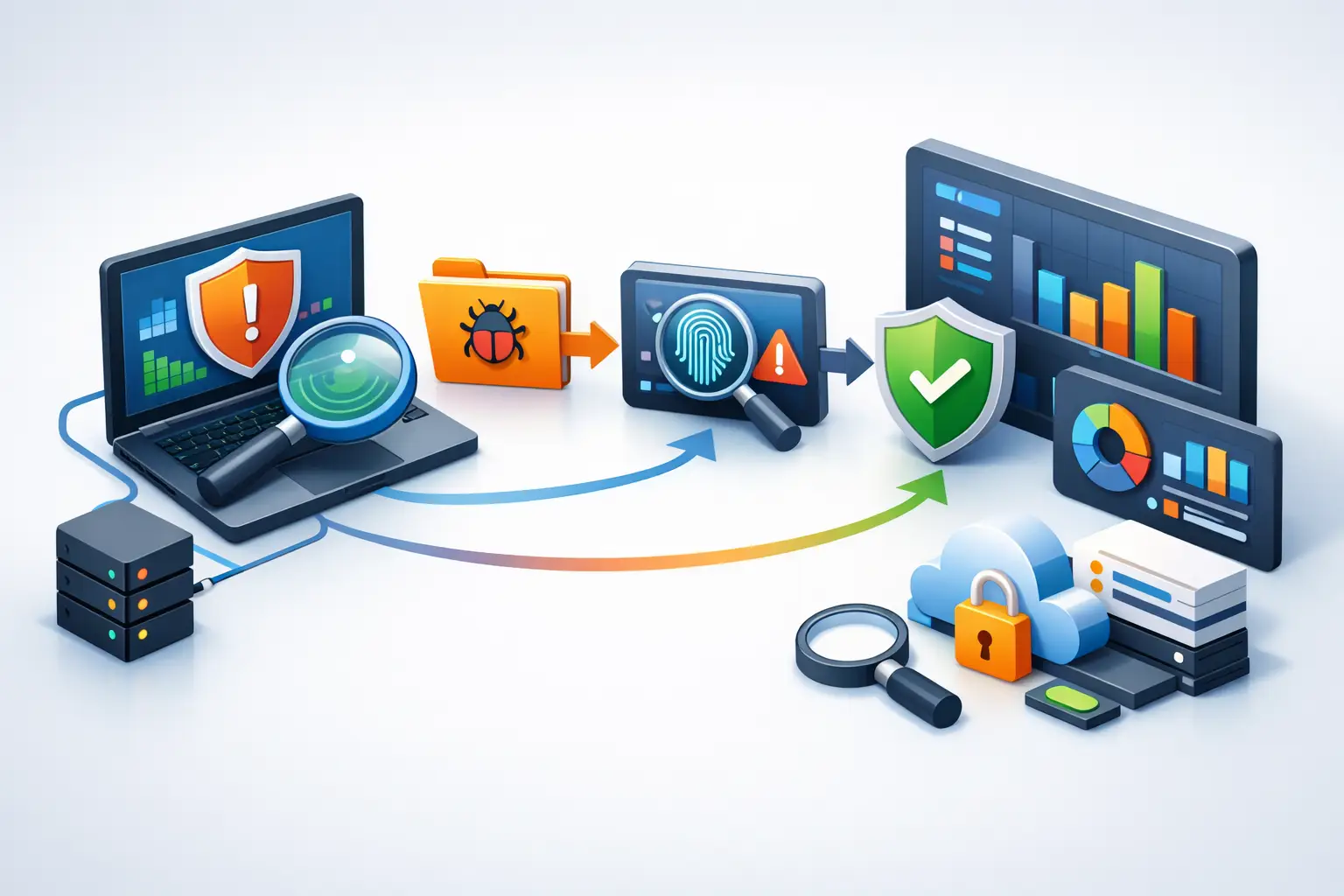
At a basic level, a network vulnerability scanner discovers assets, identifies reachable services, examines software versions and configurations, and compares what it finds against known security issues. The output may include missing patches, exposed administration services, weak encryption settings, unsupported operating systems, default credentials, and configuration gaps that create unnecessary access.
That baseline matters, but raw detection is only the starting point. Networks change constantly. New devices appear, services are enabled for a project, cloud-connected systems extend the perimeter, and employees introduce unmanaged equipment. A scanner that runs once provides a snapshot. A program built on scheduled scans and reviewed findings provides ongoing visibility.
For many businesses, external scanning is the first priority because it reflects what an internet-based attacker can see. Internal scanning becomes equally valuable once access controls, workstation management, server patching, and lateral movement risks need closer oversight. The right scope depends on your environment, but a review should examine whether the platform supports both perspectives without making administration unmanageable.
A Practical Network Vulnerability Scanner Review Framework
Do not judge a scanner by the length of its vulnerability database alone. Most established tools can identify a substantial number of common exposures. The meaningful differences are accuracy, asset visibility, reporting quality, workflow support, and the ability to turn findings into remediation decisions.
Asset discovery and coverage
A scanner cannot protect systems it does not see. Look for reliable discovery of servers, workstations, firewalls, switches, network appliances, printers, virtual machines, and other connected assets within the approved scan scope. It should distinguish between a device that is active, a device that has gone offline, and an asset that is newly visible.
Coverage should also reflect the organization’s actual attack surface. A traditional internal network scan may miss public domains, cloud-hosted services, web applications, exposed remote access portals, and email-related infrastructure. If these assets are managed in separate tools, reports should still give decision-makers a coherent view of risk rather than a collection of disconnected results.
Be cautious with vendors that promise complete visibility without discussing credentials, network segmentation, cloud environments, or scan permissions. Unauthenticated scans can identify useful external signals, but authenticated scanning generally provides deeper insight into missing patches and local configuration issues. Both have a role, and a credible provider will explain the trade-off.
Accuracy and validation
False positives waste time. False negatives create a more serious problem because they can leave teams confident that a system is safe when it is not. In a scanner review, ask how findings are verified, how often detection logic is updated, and whether the platform can provide evidence that supports the result.
A finding should tell your technical team what was observed, not simply attach a high severity label. For example, a report is more actionable when it identifies the affected host, service, detected version, exposed port, and recommended corrective action. That level of detail speeds validation and reduces back-and-forth between IT, security, and outside providers.
Accuracy also depends on scan configuration. Aggressive scanning may produce deeper results but can disrupt fragile legacy systems or consume network capacity. Conservative scans reduce that operational risk but may leave gaps. The right approach is controlled scanning: define approved windows, test sensitive environments, and adjust profiles based on the systems being assessed.
Risk prioritization that reflects business impact
A long list of critical and high findings is not a remediation plan. Severity ratings are useful, but they are not enough on their own. A vulnerability with a high technical score may be isolated behind strong controls, while a moderately rated issue on an internet-facing system may deserve immediate attention.
Prioritization should account for exposure, exploitability, asset importance, available compensating controls, and evidence of active exploitation. A public-facing server with an outdated remote administration service should rise above a similar issue on a segmented test device. Likewise, findings on systems that process customer data, support financial operations, or maintain privileged access should receive added weight.
Ask whether reports can be sorted by asset owner, business unit, location, severity, age, or remediation status. These are not cosmetic reporting options. They allow managers to assign accountability and prevent high-risk items from disappearing into a general ticket queue.
Remediation guidance and workflow
The strongest scanners do more than state that a patch is missing. They provide a clear path to remediation, including the affected software, recommended update or configuration change, references to the relevant control area, and a method for confirming closure.
That guidance should be usable by the team receiving it. An IT administrator may need technical steps. An operations leader may need a prioritized report that explains risk and expected action without a page of exploit terminology. Compliance stakeholders may need documented evidence showing dates, ownership, and remediation progress.
Consider how the scanner fits into the work your organization already performs. Can findings be assigned? Can exceptions be documented with an expiration date? Can rescans verify that a patch or configuration change resolved the issue? Can leadership receive a concise status report without manually interpreting scan output? A scanner becomes more valuable when these answers are clear.
Continuous Monitoring Changes the Value of Scanning
A quarterly or annual assessment can uncover serious weaknesses, but it cannot reliably show what changed after the report was delivered. Systems are patched, reconfigured, replaced, and sometimes exposed by mistake between assessment dates. Continuous monitoring closes much of that visibility gap.
The appropriate scan frequency depends on the environment. High-change, internet-facing systems may warrant frequent assessment. Stable internal systems may follow a different schedule. What matters is that the cadence is deliberate and that new findings trigger a defined response.
Continuous oversight also reveals trends that a one-time report cannot. Repeated patch delays, aging operating systems, recurring configuration errors, and unowned assets are governance issues, not isolated technical events. A centralized dashboard and structured reporting can make those patterns visible to the people responsible for decisions and budgets.
FortifyNET approaches scanning as part of a broader security discipline: identify exposure, understand the business impact, prioritize remediation, and monitor the environment as conditions change. That model is particularly useful for organizations that need expert interpretation alongside operational visibility.
Questions to Ask Before You Select a Scanner
A productive evaluation begins with your environment and operating model, not a vendor checklist. Ask whether the solution supports external and internal scanning where needed, how it handles authenticated access, and whether scan activity can be tuned for sensitive systems. Confirm how assets are discovered and how stale or duplicate records are handled.
Then focus on what happens after detection. Request a sample report and assess it as if your team had to use it tomorrow. Can you identify the highest-priority issues in minutes? Is each finding tied to an asset and a corrective action? Does the report distinguish open findings from verified remediation? Can it support management review or audit evidence without substantial manual cleanup?
Finally, be realistic about internal capacity. A feature-rich scanner can still fail if nobody owns configuration, validates results, coordinates remediation, and reports progress. Some organizations need a self-managed platform. Others benefit from a consultative service that combines scanning with security analysis, structured remediation planning, and recurring oversight. Neither model is universally better. The right choice is the one your team can operate consistently.
The Decision Is About More Than Detection
The best network vulnerability scanner is not necessarily the one that reports the most findings. It is the one that gives your organization dependable visibility, credible prioritization, and a documented route from discovery to verified remediation.
Treat the evaluation as a test of operational control. If the scanner helps your team see what is exposed, assign the right work, confirm that risk has been reduced, and maintain that discipline over time, it can become a meaningful part of protecting the business rather than another source of technical noise.