Vendor Access Security: Control Third-Party Risk
A vendor asks for administrator access to troubleshoot an integration. A marketing agency needs access to your website. A managed service provider needs a remote connection to maintain network equipment. Each request may be legitimate, but each creates a path into systems that hold business data, customer information, and operational controls. Vendor access security is the discipline of allowing necessary third-party access without surrendering visibility, accountability, or control.
For small and mid-sized businesses, the risk is rarely a single dramatic failure. It is usually the accumulation of exceptions: a shared account that was never removed, an external user given more permissions than needed, a contractor still connected after a project ends, or a cloud application linked to data nobody is monitoring. These conditions expand the attack surface while making incident response slower and less certain.
Why vendor access security deserves operational attention
Third parties often operate outside your direct management structure, yet they may handle functions that are central to your business. They may support payroll, email, web hosting, payment processing, customer relationship management, software development, network administration, or compliance work. Their access can be necessary, but it should never be assumed to be safe simply because a contract exists.
A vendor can introduce risk through compromised credentials, weak internal controls, insecure remote tools, excessive permissions, or an employee mistake. In some cases, the vendor is not the initial target at all. An attacker may use a less-protected vendor account as a practical route into a larger organization.
The business impact extends beyond a technical incident. Uncontrolled third-party access can create compliance gaps, interrupt operations, expose regulated information, damage customer confidence, and complicate cyber insurance claims. The question is not whether vendors should have access. It is whether your organization can identify exactly who has access, what they can reach, why they need it, and when that access should end.
Build vendor access security around least privilege
The most effective control is simple in principle: grant the minimum access required for the minimum time required. This is known as least privilege, and it turns a broad trust decision into a specific, manageable authorization decision.
A website developer, for example, may need access to a staging environment and a limited content management role. That does not automatically justify access to production server consoles, domain registrar settings, customer databases, or company email. A managed IT provider may need remote administration rights, but those rights should be tied to named personnel, approved tools, and documented service responsibilities.
Shared vendor credentials should be treated as a control failure, not a convenience. When multiple people use one account, there is no reliable way to confirm who performed an action or remove access for one individual. Named accounts provide traceability and make offboarding possible.
Where systems support it, use role-based permissions rather than broad administrator privileges. Segment access by environment and function. Production systems deserve stricter controls than development tools, and access to sensitive data should be separated from routine operational tasks whenever practical.
Establish a clear access lifecycle
Vendor access should have a beginning, a monitored middle, and a definite end. Too many organizations focus on the approval request while neglecting the controls that follow.
Before access is granted, document the business purpose, systems involved, requested permission level, vendor contact, approving owner, and expected expiration date. This record gives IT and operations teams a basis for review. It also prevents a common problem: access that remains active because nobody can confirm whether the original work is complete.
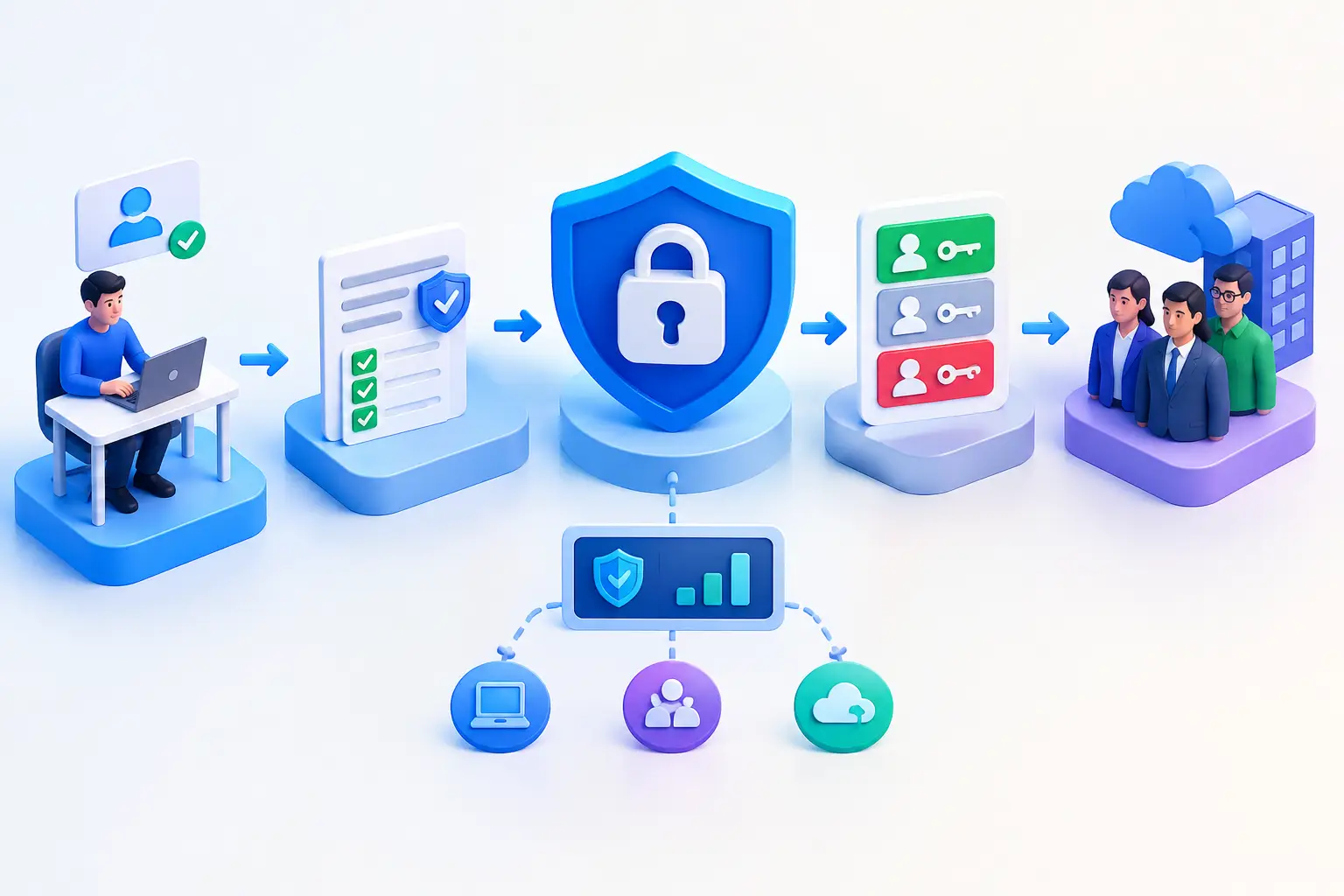
A controlled lifecycle should include these five actions:
- Verify the vendor's identity and confirm that the request comes through an approved contact.
- Require multifactor authentication for remote access, cloud administration, and other sensitive systems.
- Set an expiration date for project-based access and require reapproval before it is extended.
- Review active vendor accounts on a defined schedule, with more frequent reviews for privileged access.
- Disable access immediately when a contract ends, a project closes, or a vendor contact changes roles.
The exact schedule depends on the sensitivity of the system. A vendor with read-only access to a low-risk collaboration platform may warrant quarterly review. A provider with administrative control over a firewall, cloud tenant, domain, or financial application may need monthly review and stronger session oversight.
Make remote access visible and defensible
Remote access is often where vendor security becomes difficult to manage. It may occur through virtual private networks, remote desktop tools, cloud portals, application programming interfaces, browser-based consoles, or vendor-managed agents. Each method needs a documented owner and a defined security standard.
Start by identifying every approved remote access path. If your organization cannot inventory the tools vendors use to reach internal or cloud systems, it cannot confidently assess the exposure. Eliminate unauthorized remote tools and avoid allowing vendors to choose access methods without review.
Multifactor authentication is a baseline control, but it is not the full answer. Monitor sign-in activity, failed login attempts, unusual locations, privilege changes, and access outside approved working windows. For high-risk systems, use time-limited elevation or require an internal administrator to approve a session before privileged access begins.
Logging matters because it supports both prevention and response. If a website configuration changes unexpectedly or a mailbox rule is created to redirect messages, logs can show whether a vendor account was involved. Without usable records, investigations become dependent on assumptions and vendor recollection.
Assess the vendor, not just the access request
Access controls reduce exposure, but they do not replace vendor due diligence. A third party that handles sensitive information or receives privileged access should be evaluated according to the risk it creates.
For a lower-risk vendor, that review may be limited to confirming business legitimacy, support contacts, and security requirements. For a provider that hosts data, manages infrastructure, or connects directly to critical systems, the review should go further. Ask how the vendor protects credentials, handles security incidents, limits employee access, manages subcontractors, and notifies customers of a breach.
Security questionnaires and compliance reports can help, but they should not become a paperwork exercise. Focus on the controls that relate to the service being provided. A vendor processing customer data presents a different risk profile than a contractor updating website copy. Security requirements should be proportional, documented, and enforceable through contracts or service agreements where appropriate.
Use monitoring to find access drift
Vendor access security is not complete at onboarding. Accounts change, integrations expand, users switch roles, and systems are replaced. Over time, permissions drift away from the original business need.
Continuous monitoring helps identify that drift before it becomes an incident. Review external accounts across cloud platforms, email environments, domain management portals, web applications, and network administration systems. Look for inactive accounts, privileges that exceed defined roles, unexpected integrations, and accounts without a current business owner.
Domain and email environments deserve particular attention. A vendor with registrar access may be able to change DNS records, redirect traffic, or interfere with email delivery. An external administrator in a mail platform may create forwarding rules, reset passwords, or access sensitive communications. These permissions should be limited, logged, and reviewed with the same discipline applied to network administration.
A centralized dashboard and recurring reports can make this process practical for organizations without a large internal security team. The goal is not to generate more alerts. It is to turn findings into assigned remediation actions, track their status, and maintain evidence that access controls are being managed.
Define ownership before an incident tests it
Every vendor relationship with system access should have an internal business owner. That owner is responsible for confirming the access remains necessary, while IT or security validates that the technical controls remain appropriate. Procurement, legal, compliance, and operations may also have roles, but accountability should not be distributed so broadly that nobody makes the final decision.
Document who can approve vendor access, who can modify it, who reviews it, and who disables it. Include vendor accounts in incident response planning. If a vendor credential is suspected of compromise, your team should know how to revoke access, preserve logs, contact the vendor, and evaluate affected systems without delay.
Vendor relationships are necessary to modern business operations. The disciplined approach is not to block access by default, but to make every connection visible, justified, limited, and reviewable. When third-party access is managed as an ongoing security control rather than a one-time setup task, your organization is better positioned to protect the assets customers and employees depend on.