What a Web Application Firewall Protects
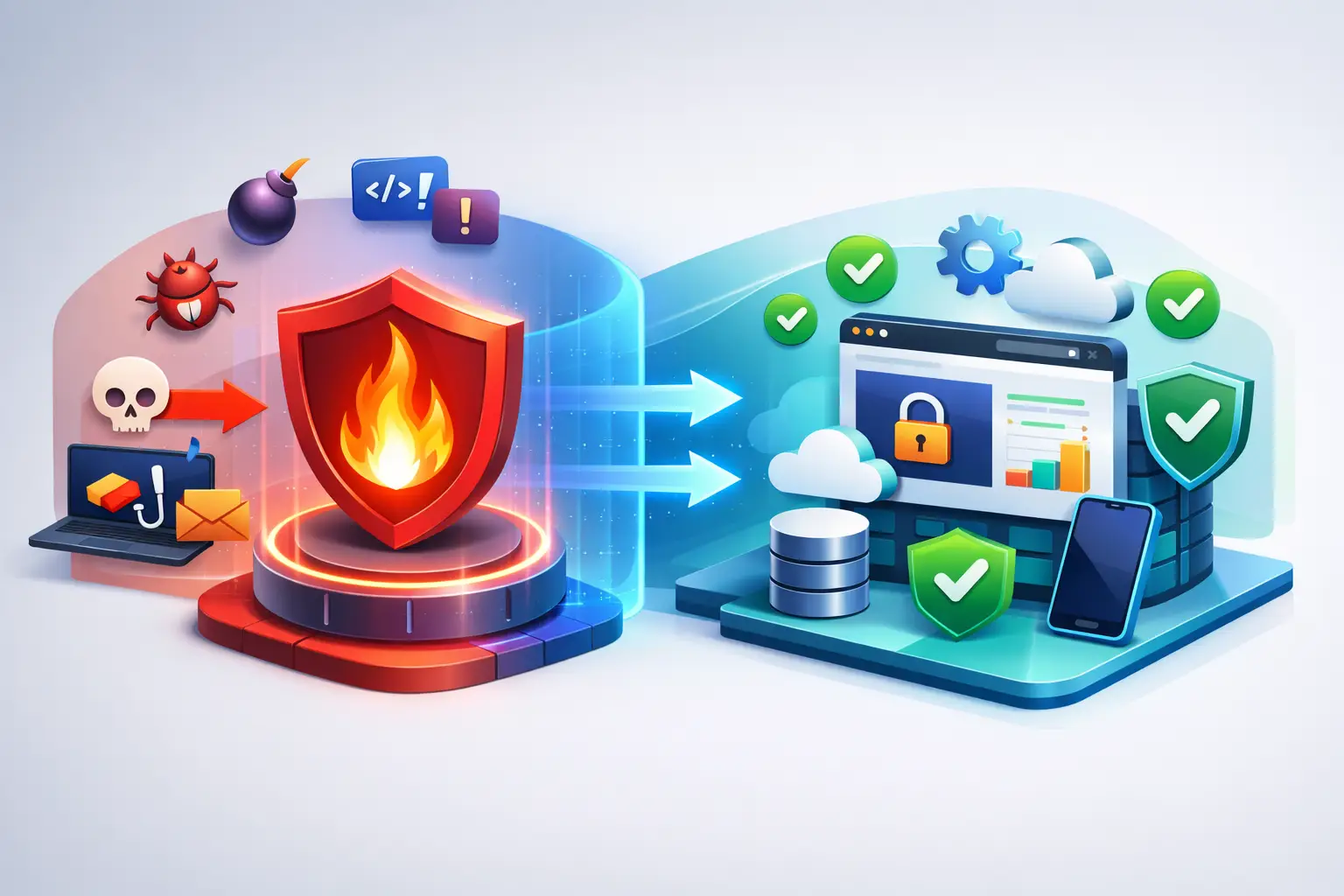
A web application firewall sits between a public-facing application and the internet, inspecting web traffic before it reaches the application. For businesses that depend on customer portals, ecommerce sites, APIs, and cloud-hosted platforms, it can reduce exposure to common attacks that exploit application-layer weaknesses. It is not a replacement for secure development or vulnerability remediation. It is a control that gives your team more time, visibility, and protection while those issues are addressed.
The practical value is straightforward: an attacker only needs one exposed input field, outdated component, or poorly protected endpoint to create a serious incident. A properly managed firewall can identify suspicious requests, block known attack patterns, and record activity that deserves investigation. The difference between a useful control and a false sense of security comes down to configuration, monitoring, and a clear remediation process.
What a Web Application Firewall Actually Does
A web application firewall, often called a WAF, examines HTTP and HTTPS requests directed at an application. Unlike a traditional network firewall that evaluates traffic by IP address, port, and protocol, a WAF focuses on how a web request is constructed and what it is trying to do.
For example, it can evaluate whether a request contains database commands in a form field, attempts to run malicious script in a browser, sends unusually large payloads, or repeatedly probes sensitive URLs. Based on policies and detection rules, the WAF may allow the request, log it for review, challenge the visitor, limit the request rate, or block it outright.
This makes a WAF particularly relevant for applications that accept user input or expose APIs. Login forms, checkout pages, account dashboards, content management systems, file upload functions, and administrative portals all create opportunities for misuse. The more public-facing functionality an organization operates, the more important it becomes to understand how those endpoints are being accessed.
Attacks a WAF Can Help Reduce
A WAF is commonly used to reduce risk from SQL injection, cross-site scripting, command injection, malicious file uploads, automated credential attacks, and abusive bot traffic. It can also help control request floods that target a specific application function rather than the entire network.
Rate limiting is especially useful for login and password-reset pages. Without it, attackers can attempt large volumes of credential combinations or trigger excessive reset requests. A WAF can set thresholds based on IP address, session behavior, geography, request path, or other signals. These controls do not eliminate account takeover risk, but they make automated abuse more difficult and easier to identify.
Many WAF platforms also provide virtual patching. When a newly identified application vulnerability cannot be fixed immediately, a temporary rule can block the exploit pattern at the edge. This is valuable when development teams need time to test a permanent code fix. Virtual patching should have an owner and an expiration review. Temporary controls can become forgotten controls, leaving teams uncertain about what is protected and why.
Where a Web Application Firewall Fits in Your Security Program
A WAF should be treated as one layer in a broader application security program. It cannot correct insecure code, remove vulnerable software, enforce strong user access practices, or secure internal systems that are not exposed through the web application. It is also not a substitute for backups, incident response planning, endpoint protection, or network segmentation.
The strongest operating model connects several disciplines. Security testing identifies application weaknesses. Development or IT teams remediate the root cause. The WAF reduces immediate exposure and produces records of attempted exploitation. Continuous monitoring helps validate that controls remain active as applications, domains, and cloud services change.
This layered approach matters because public web assets change frequently. A new marketing form may be added outside the normal release process. A third-party integration may create an API endpoint. A software update can change URL structures and invalidate a previously appropriate rule. Security controls must be reviewed against the current attack surface, not the environment as it existed during the last annual assessment.
For small and mid-sized organizations, the question is usually not whether a WAF is useful. It is whether the business has the visibility and operational capacity to manage it effectively. A firewall operating in detection-only mode may generate valuable intelligence, but it does not actively stop attacks. A firewall set to block too aggressively can interrupt legitimate customers, integrations, or employee workflows. The right balance depends on the application, its users, and the business impact of disruption.
Choosing the Right Deployment Approach
Web application firewalls are commonly deployed as cloud-based services, appliance-based controls, software installed in an environment, or features within a content delivery and cloud security platform. For many businesses, a cloud-based WAF is the most practical option because it can protect traffic before it reaches the origin infrastructure and can scale with internet-facing demand.
However, deployment should be based on the application architecture rather than convenience alone. An organization with a public website and API hosted in a cloud environment may need protection for multiple domains, subdomains, and API paths. A business with legacy applications may require more careful testing because older systems sometimes rely on unusual request formats or unsupported encryption settings.
Before selecting or configuring a WAF, document the assets that need coverage. This includes public domains, web applications, API endpoints, administrative interfaces, and relevant third-party services. Confirm where DNS is managed, where the application is hosted, who owns certificate renewal, and which teams can make changes during an incident. These operational details often determine whether a WAF can be deployed quickly when it matters.
Start in Monitoring Mode, Then Tune Deliberately
A common and sensible approach is to begin with logging and monitoring before enforcing broad blocking rules. This provides a baseline of normal traffic and helps identify false positives. A legitimate customer request that resembles an attack pattern should be investigated and narrowly tuned, not ignored.
Tuning should be specific. Avoid broad exclusions that disable protection for an entire application path unless there is no safer alternative. If a business application requires a particular request format, scope the exception to the precise parameter, endpoint, or trusted integration involved. Document why the exception exists, who approved it, and when it will be reviewed.
Once rules move into blocking mode, monitor business outcomes as well as security events. Look for increases in failed logins, payment errors, form submission failures, support tickets, and API errors. Security teams need evidence that a control is reducing risk without creating unacceptable friction for users.
The Management Tasks That Determine Value
A WAF is not a set-and-forget security purchase. Rules, applications, threat patterns, and legitimate customer behavior all change. Continuous oversight is what turns firewall activity into an operational security control.
A disciplined management process should include these four activities:
- Review blocked, challenged, and anomalous requests for signs of targeted activity or false positives.
- Verify that every public application, domain, and critical API endpoint remains covered after infrastructure or DNS changes.
- Reassess custom rules, exclusions, and virtual patches on a defined schedule.
- Connect significant WAF events to vulnerability findings, incident procedures, and remediation ownership.
Reporting should translate technical events into business-relevant action. A report that only lists thousands of blocked requests does not tell leadership whether risk is increasing. More useful reporting identifies which assets were targeted, what attack methods were observed, whether attempted attacks align with known vulnerabilities, and what remediation decisions are still open.
For compliance stakeholders, documentation also matters. Retain evidence of WAF coverage, policy reviews, rule changes, incident investigations, and remediation actions. These records help demonstrate that security controls are monitored and maintained rather than merely purchased.
Common WAF Mistakes to Avoid
The first mistake is assuming that blocked traffic means the application is secure. Attackers adapt, and some attacks do not match known signatures. Regular vulnerability scanning, application testing, and secure configuration reviews remain necessary.
The second is protecting the primary website while overlooking related assets. Staging environments, legacy subdomains, direct-to-origin access, exposed APIs, and administrative pages often receive less attention. An attacker will choose the weakest reachable path, not the best-known domain.
The third is leaving ownership unclear. If no one is responsible for reviewing alerts, approving exceptions, and coordinating fixes, the WAF becomes a stream of unexamined logs. Assign accountable owners across IT, security, development, and operations, even when those functions are handled by a small team or external partner.
Finally, do not let a WAF become the reason a known vulnerability remains unresolved. Its purpose is to reduce exposure while permanent remediation is planned, tested, and completed. The root cause should always remain visible in the organization’s remediation plan.
Make WAF Decisions Part of Daily Operations
The most effective web application firewall program is tied to the way your organization manages change. When a new domain goes live, it should be assessed for coverage. When a vulnerability is discovered, the team should determine whether a temporary rule is needed. When reports show repeated targeting of a login endpoint or API, that activity should inform access controls, rate limits, and development priorities.
Protecting public-facing applications is not only about stopping bad requests. It is about building the visibility and discipline to identify exposure early, understand what matters, and remediate issues before they become business incidents.