What Compliance Vulnerability Scanning Does
An audit rarely starts with a breach. More often, it starts with a simple question from leadership, a customer, or an assessor: can you show that your systems are being checked for security weaknesses on a regular basis? That is where compliance vulnerability scanning becomes operationally valuable. It gives organizations a repeatable way to identify known weaknesses, document exposure, and demonstrate that security controls are not just written down, but actively verified.
For small and mid-sized businesses, this matters because compliance pressure tends to arrive before a mature security program does. A company may be growing quickly, adding cloud services, launching new web assets, and handling more sensitive information without having a dedicated internal security team. In that environment, scanning is not just a technical task. It is a control mechanism that supports governance, remediation, and accountability.
What compliance vulnerability scanning actually covers
At its core, compliance vulnerability scanning is the process of checking systems, applications, and network-exposed assets for known vulnerabilities in a way that aligns with a regulatory, contractual, or policy requirement. The scanner itself is only one part of the process. The real value comes from how findings are scoped, interpreted, prioritized, and tracked through remediation.
That distinction matters. A raw scan can generate a long list of issues without telling you which findings affect compliance obligations, which are false positives, and which require immediate action. Compliance-driven scanning should narrow that gap. It should help your team understand what was assessed, what was found, how severe the risk is, and what needs to happen next.
Depending on your environment, the scan may include public-facing web applications, internal hosts, cloud workloads, firewall configurations, exposed services, and supporting infrastructure. The exact scope depends on the framework, your asset inventory, and how your systems are used. A healthcare provider, an ecommerce business, and a SaaS company may all perform vulnerability scans, but the control objectives and documentation requirements will differ.
Why scanning alone is not enough
Many organizations assume that buying a scanner solves the compliance problem. It does not. Most frameworks do not ask whether you own a tool. They ask whether you perform security checks consistently, review the results, address identified weaknesses, and maintain evidence.
This is where programs often break down. Teams run scans on an ad hoc basis, save reports in separate folders, and fix only the most obvious issues. Six months later, when an audit or customer security review appears, there is no clean history of what was scanned, how often, who reviewed the findings, or whether remediation was verified.
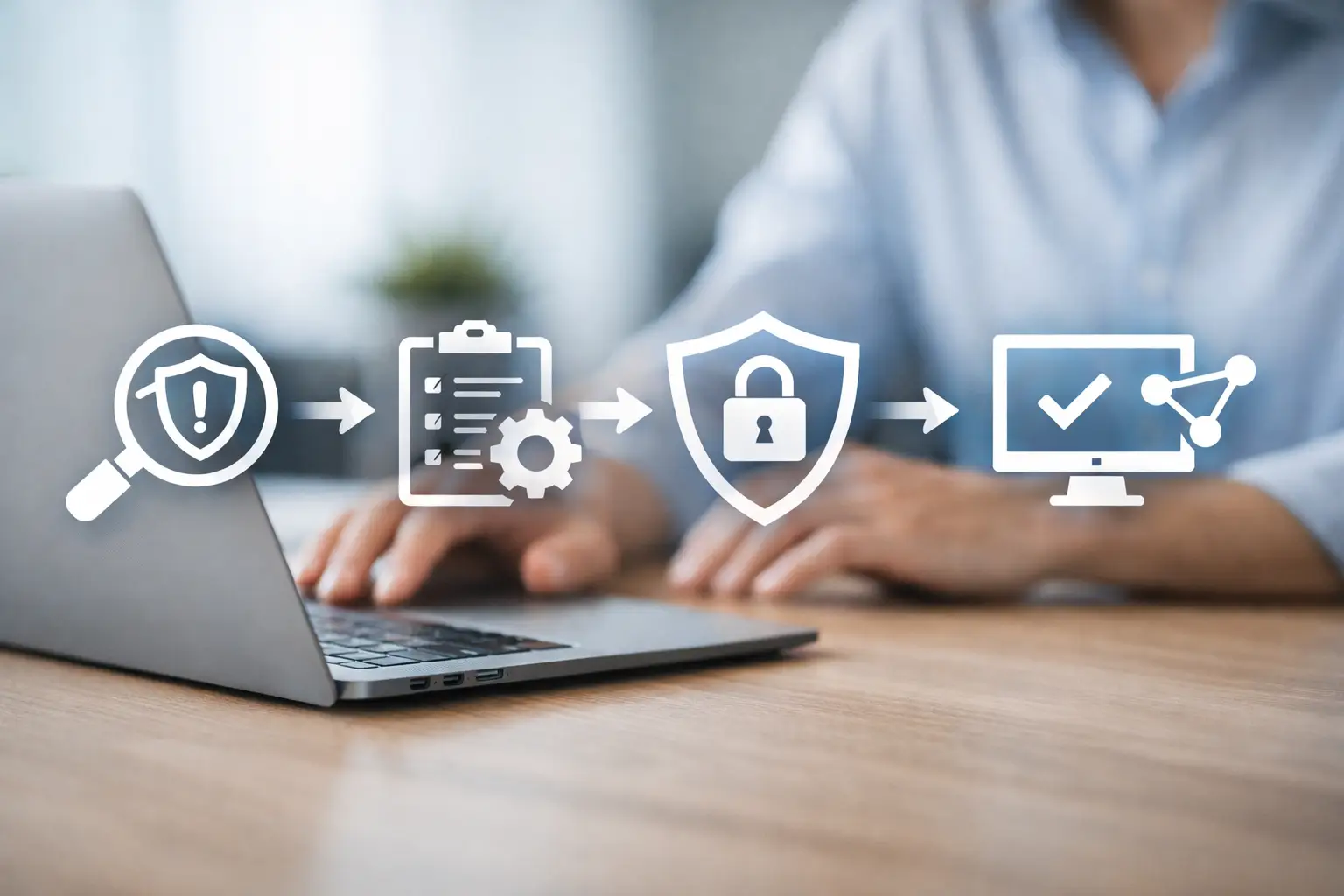
A workable program treats scanning as part of an operational cycle. Assets are identified. Scan schedules are defined. Findings are reviewed by someone who understands both technical risk and compliance context. Remediation is assigned, retested, and documented. That process creates defensible evidence and reduces the chance that the same weakness stays open for months without visibility.
How compliance vulnerability scanning supports audits
Auditors and compliance assessors are usually looking for consistency more than perfection. They know vulnerabilities will exist. What they want to see is whether your organization has a documented method to detect issues and respond in a reasonable timeframe.
That is why compliance vulnerability scanning is useful even when the scan results are not clean. If your reports show identified issues, assigned remediation actions, and proof of follow-up, that demonstrates control maturity. It shows that security is being managed rather than ignored.
The strongest reporting usually answers a few simple questions clearly. What assets were included? When were they scanned? What vulnerabilities were found? How were they prioritized? What was remediated? What remains open, and why? This level of reporting helps internal stakeholders as much as external auditors because it turns technical findings into trackable business actions.
Common frameworks and the role of scanning
Different compliance standards treat vulnerability scanning differently, but the pattern is familiar. Most require periodic assessment of systems, evidence of remediation, and some form of continuous oversight. PCI DSS is an obvious example, especially for organizations that process payment card data. Security-minded customers may also expect regular scans during vendor reviews, even when there is no formal mandate in place.
Internal policy requirements can be just as important. A company may commit to quarterly scans, monthly external exposure reviews, or scan-before-release checks for public-facing applications. Those commitments become meaningful only when they are measurable and documented.
The trade-off is that more frequent scanning creates more operational work. If the scan cadence is too aggressive for your team to review and remediate findings properly, the process becomes noisy instead of useful. It is better to build a schedule your organization can sustain than to create a control that looks strong on paper but fails in practice.
What good scan reporting looks like
The best scan reports do not overwhelm non-technical stakeholders with hundreds of unresolved entries and no context. They separate critical issues from minor ones, group findings by asset or business function, and provide remediation guidance that an administrator or IT manager can act on.
That often means translating scanner output into plain operational language. If a web server is missing security updates, the report should say what system is affected, why it matters, and what corrective action is recommended. If an exposed service creates a policy or framework gap, that connection should be stated directly.
Good reporting also preserves history. One report tells you what happened at a point in time. A reporting trail shows whether your security posture is improving, whether recurring vulnerabilities keep returning, and whether remediation timelines are realistic. For organizations trying to strengthen governance, that trend view is often more valuable than the individual scan itself.
Where organizations usually run into trouble
The first issue is incomplete scope. Many businesses scan only the assets they remember, not the full environment they actually operate. That leaves blind spots in cloud infrastructure, subdomains, test systems, and externally exposed services that were set up outside of formal change control.
The second issue is poor prioritization. Not every finding has the same impact, and not every high-severity issue has the same business relevance. A disciplined review process should consider exploitability, exposure, system criticality, and the compliance significance of the affected asset.
The third issue is treating findings as one-time cleanup items. Vulnerabilities reappear. New assets are deployed. Configuration drift happens. Without ongoing monitoring and repeated validation, an organization can pass one review and still remain exposed the following month.
Building a practical scanning program
A useful program starts with asset visibility. You need a defined inventory of what should be scanned, including external assets, internal systems in scope, and the owners responsible for remediation. From there, scan frequency should align with both compliance needs and operational capacity.
Next comes triage. Findings need human review, especially when compliance evidence is involved. That review confirms severity, removes false positives when possible, and maps issues to the appropriate remediation owner. Without ownership, reports turn into archives instead of action plans.
Then comes verification. Closing a ticket is not the same as resolving a vulnerability. Systems should be rescanned to confirm that the issue was actually remediated and that no related exposure remains. This is one reason platform-backed monitoring is valuable. It keeps the process visible beyond the first report.
For many organizations, the right model is not just scanning software. It is a structured service layer around the software: recurring assessments, centralized dashboards, actionable reports, and guidance on what to fix first. That is especially relevant for businesses that need to show progress to leadership, customers, or assessors without building a full internal security function.
Compliance vulnerability scanning as an ongoing control
The most effective security programs treat scanning as a living control, not a checkbox. Requirements change, infrastructure changes, and attack surfaces expand. A scan that was sufficient six months ago may no longer cover the systems that matter most today.
That is why mature programs connect scanning to broader oversight. Findings should inform patching priorities, hardening decisions, exception management, and periodic reviews of internet-facing assets. When done well, compliance vulnerability scanning strengthens both audit readiness and day-to-day risk reduction.
For a growing business, that balance matters. Compliance should not be a separate track from security operations. It should be evidence that your organization can identify issues, understand their impact, and remediate them with consistency. If your scanning process helps you do that month after month, it is doing more than satisfying a requirement. It is helping protect the business in a way that stands up to scrutiny.