How to Monitor Domain Changes Before They Become Risk
A domain is more than a web address. It is a control point for your website, email delivery, customer trust, and public-facing services. Knowing how to monitor domain changes gives your organization an early warning when that control point shifts - whether the change is planned, accidental, or malicious.
A new DNS record can redirect traffic. A modified MX record can disrupt business email. An unexpected certificate can indicate that someone is preparing to impersonate your brand. None of these events automatically means an incident, but each deserves context, ownership, and a documented response.
For small and mid-sized businesses, domain monitoring should not be a stream of unexplained alerts. It should be a disciplined workflow: establish what normal looks like, detect changes quickly, determine whether they are authorized, and remediate the ones that create exposure.
Why domain changes need continuous oversight
Domains are often managed by several parties at once. Marketing may work with an agency on website updates. IT may manage DNS and email authentication. A cloud provider may require a verification record. A registrar account may be held by a former employee or outside vendor. This distributed ownership makes domain changes easy to miss.
Attackers understand the value of that gap. They may target registrar credentials, use a compromised DNS account to alter records, create lookalike email infrastructure, or take advantage of an expired domain. Even routine operational changes can introduce risk when a record is deleted, a nameserver is replaced, or a certificate is issued without the security team knowing why.
Continuous monitoring provides visibility between formal security assessments. It helps administrators identify a change at the time it occurs rather than after customers report an outage, email fails authentication, or a browser displays a certificate warning.
How to monitor domain changes with a reliable baseline
Effective monitoring starts before the first alert. Your team needs an approved baseline for every domain and subdomain that matters to the business. Without it, a monitoring platform can tell you that a record changed, but not whether the change is expected or risky.
Document the domain owner, registrar, renewal date, DNS provider, nameservers, and the internal business owner. Record the expected web destinations, mail servers, and third-party services connected to the domain. Include dormant domains and defensive registrations, not only the primary corporate website. Older domains are frequently overlooked, especially after acquisitions, rebrands, or vendor transitions.
The baseline should also capture approved DNS records. That includes A and AAAA records, CNAMEs, MX records, TXT records, NS records, and CAA records. For email, preserve current SPF, DKIM, and DMARC configurations. For web services, record active TLS certificates, their issuing authorities, expiration dates, and covered hostnames.
A baseline is not a static inventory saved once and forgotten. Review it after infrastructure migrations, web launches, provider changes, and major marketing campaigns. The goal is to make authorized change recognizable, not to freeze legitimate business activity.
Assign accountable owners
Every monitored domain needs a named business owner and a technical owner. The business owner can confirm whether a change supports an approved initiative. The technical owner can validate implementation details and coordinate remediation.
This is particularly important when DNS is maintained by a web agency or managed service provider. External access may be necessary, but internal accountability should remain clear. If nobody can quickly answer who authorized a new CNAME or nameserver, the organization has a governance issue as well as a technical one.
Changes your monitoring should detect
Not every domain event carries the same risk. Prioritize the changes that can alter control, redirect communications, or weaken trust. A practical domain monitoring program should watch for at least these categories:
- Registrar and registration changes, including expiration dates, registrant contact information, status locks, and transfer activity.
- Nameserver changes, which can move DNS control to another provider or an attacker-controlled environment.
- DNS record additions, deletions, and modifications, especially A, AAAA, CNAME, MX, TXT, NS, and CAA records.
- Email authentication changes involving SPF, DKIM, and DMARC, which can affect delivery and increase spoofing risk.
- New, renewed, revoked, or changed TLS certificates associated with the domain and its subdomains.
- Newly discovered subdomains, exposed services, and changes in the public-facing IP addresses tied to key hostnames.
Nameserver and MX record changes generally require immediate attention because they can affect broad portions of the environment. A TXT record may be low risk, such as a temporary provider verification, but it should still be reviewed. The right response depends on the record, the asset it affects, and whether the change was approved.
Certificate monitoring deserves special attention. A certificate issued for a domain you do not recognize may be legitimate, such as a newly deployed SaaS platform. It can also be an early signal of unauthorized infrastructure or attempted impersonation. Validate the requesting team, issuing authority, hostname, and deployment purpose before dismissing the alert.
Turn alerts into an operating process
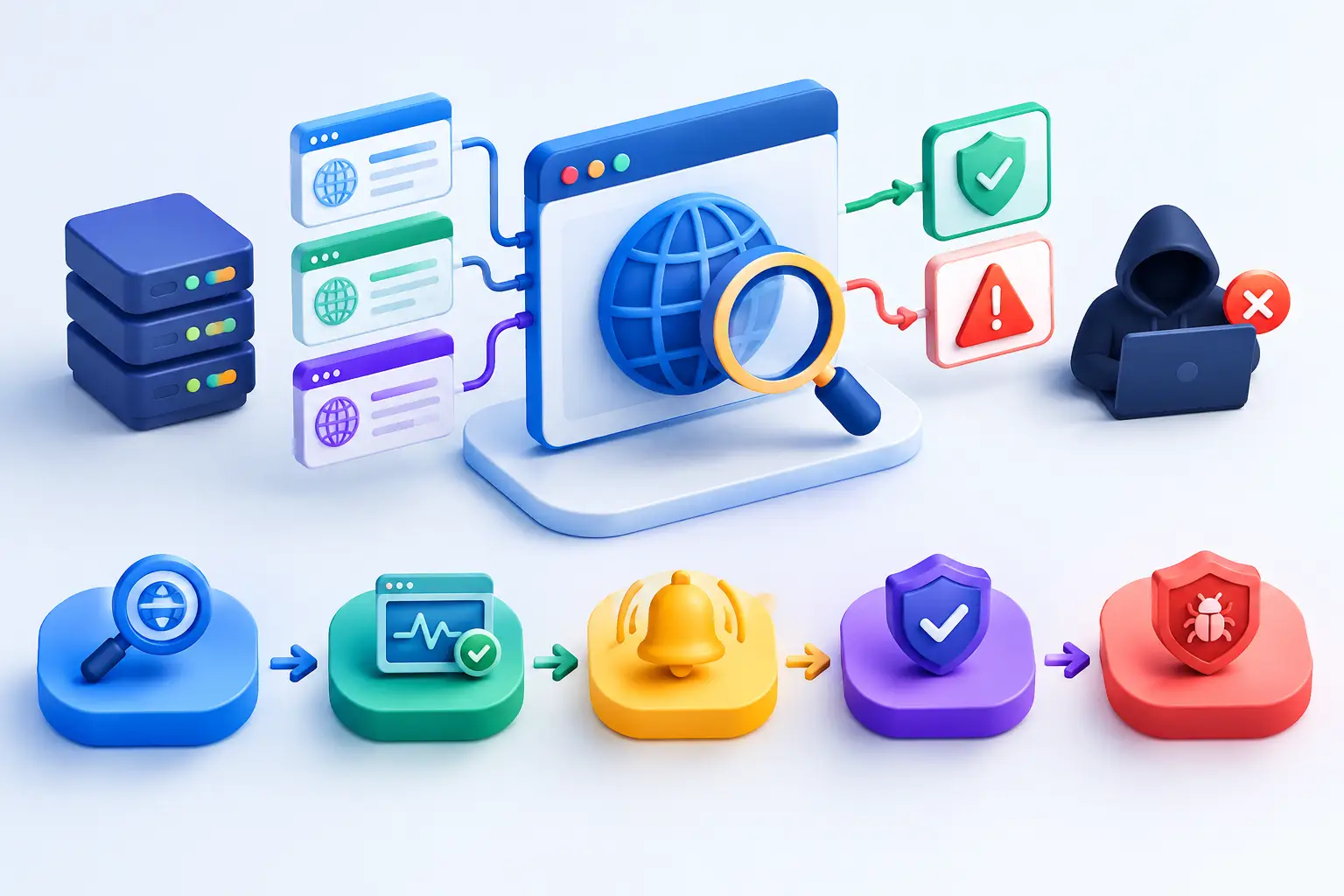
Monitoring creates value only when alerts lead to decisions. Establish a simple triage process that your IT and security teams can use consistently.
First, validate the event. Confirm the old and new values, affected domain or subdomain, time of change, source of detection, and potential service impact. DNS propagation can produce confusing results, so compare data from reliable sources and the authoritative DNS provider before taking disruptive action.
Next, determine authorization. Check change tickets, deployment calendars, vendor notices, and the designated domain owner. A legitimate website release may explain a new CNAME. An approved email platform rollout may explain new DKIM selectors. If the change cannot be tied to a request, person, or business purpose, treat it as suspicious until verified.
Then assess exposure. Ask whether the event changes where users connect, where email is delivered, who controls DNS, or how customers authenticate your identity. A modified A record for a customer login portal deserves a faster response than a verification TXT record on an inactive campaign subdomain.
When a change is unauthorized, contain it promptly. Revert the affected record if it is safe to do so, secure registrar and DNS accounts, rotate credentials, review privileged access, and preserve evidence for investigation. If email authentication or web traffic may have been affected, expand the review to related accounts, logs, certificates, and service providers.
Finally, document the outcome. Record what changed, who approved it or how it was remediated, the business impact, and any follow-up actions. This turns individual alerts into useful operational evidence for leadership, audits, and future incident response.
Protect the accounts behind the domain
DNS monitoring cannot compensate for weak control of the registrar and DNS provider accounts. Protect those accounts with multifactor authentication, unique administrator accounts, least-privilege access, and periodic access reviews. Avoid shared credentials, particularly for agencies and contractors.
Enable registrar locks where appropriate and verify that recovery email addresses and phone numbers are current and controlled by the organization. Many domain takeovers begin with account recovery rather than a sophisticated technical exploit. Administrative contacts are security assets, not just billing details.
Also review renewal controls. Auto-renewal is valuable, but it is not enough if payment methods, renewal notifications, or registrar access are tied to a departed employee. Track renewal dates centrally and test the organization’s ability to access critical registrar accounts before an emergency forces the issue.
Avoid alert fatigue without losing visibility
A team that receives every minor DNS fluctuation without context will eventually ignore meaningful warnings. Tune monitoring based on asset criticality and change type. Your primary domain, customer portal, payment pages, executive email domains, and identity-related services should have the shortest review windows and strongest escalation paths.
Lower-risk domains can use a less urgent workflow, but they should not disappear from inventory. An expired campaign domain or abandoned microsite can be registered and used to imitate your organization long after the original project ends.
Centralized dashboards and scheduled reports help leadership see whether the domain environment is becoming more controlled over time. They should show more than alert volume. Useful measures include unverified changes, time to validate critical alerts, domains approaching expiration, unresolved certificate issues, and the status of email authentication across managed domains.
FortifyNET approaches domain monitoring as part of a broader security discipline: identify exposure, understand its business impact, assign remediation, and verify that the risk is resolved. That model keeps monitoring connected to action rather than treating it as another inbox of notifications.
A well-managed domain environment rarely attracts attention because planned changes proceed cleanly and suspicious changes are caught early. That quiet reliability is the objective: clear ownership, continuous visibility, and a response process that protects the business before a small domain change becomes a customer-facing problem.