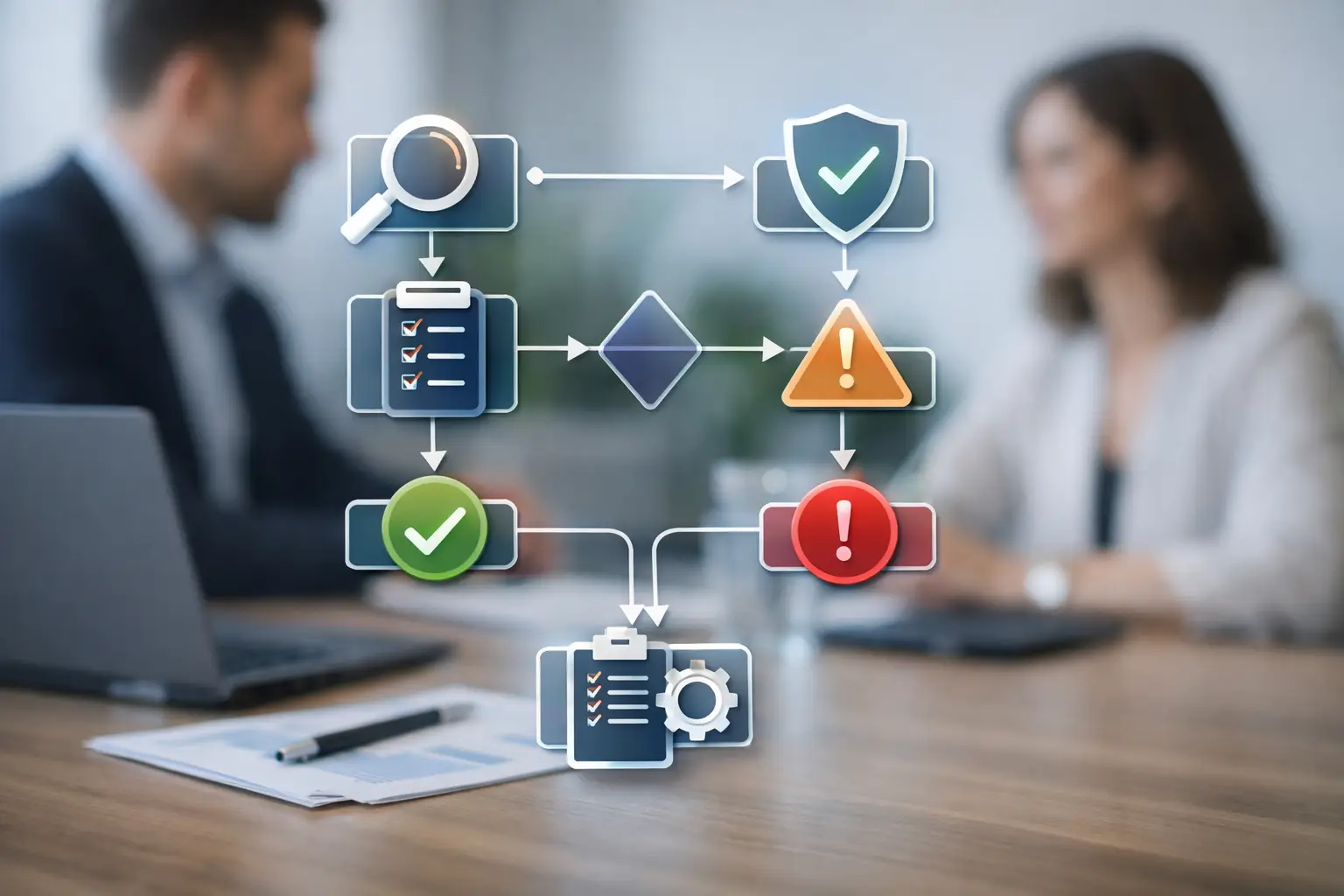
What a Compliance Readiness Scan Shows
A failed audit rarely starts with the audit itself. It starts months earlier, when a public-facing system drifts out of policy, a required control is only partially enforced, or nobody can say with confidence which assets are in scope. A compliance readiness scan helps catch those gaps before they turn into findings, delays, or customer concerns.
For most organizations, compliance pressure does not arrive as a single event. It builds through client questionnaires, cyber insurance renewals, vendor reviews, contract requirements, and internal governance expectations. That is why readiness matters. You need a way to identify where your environment aligns with expected controls, where it does not, and what needs attention first.
What a compliance readiness scan actually does
A compliance readiness scan evaluates whether your technical environment appears prepared for a formal compliance review. It is not the same as a certification audit, and it does not replace a qualified assessor where one is required. Its role is earlier in the process. It gives your team a structured view of likely control gaps, visible weaknesses, and configuration issues that could affect compliance standing.
That distinction matters. Many teams assume compliance is a documentation exercise, then discover late in the process that their systems do not support what their policies claim. A readiness scan helps connect policy intent to operational reality. If multi-factor authentication is required, the environment should reflect that. If exposed services create unnecessary risk, they should be identified and reviewed. If patching, encryption, access restrictions, or email protections are part of the standard you are working toward, readiness scanning helps surface whether those controls are visible and functioning as expected.
In practice, the scan often focuses on internet-facing assets, network exposure, web application behavior, certificate issues, service configurations, and other observable indicators tied to common compliance expectations. Some gaps are obvious and urgent. Others are less dramatic but still relevant because they suggest inconsistent control enforcement.
Why readiness scanning matters before an audit
An audit is a point-in-time judgment. Readiness is an operational condition.
That difference is where many organizations get stuck. They prepare for the meeting, assemble documents, and answer questionnaires, but they have not fully assessed what their environment would reveal under scrutiny. A compliance readiness scan gives you a more defensible starting point. Instead of saying, "we believe we are covered," you can work from actual findings and prioritized remediation.
For small and mid-sized businesses, this is especially useful because internal teams are often balancing security, infrastructure, and day-to-day operations with limited bandwidth. A readiness scan narrows the field. It helps you focus on what is most likely to create audit friction or increase risk exposure.
It also reduces the cost of last-minute fixes. Remediation becomes more expensive when it is rushed, poorly scoped, or performed during an active audit cycle. Addressing known issues earlier gives teams more room to plan changes, validate them, and document the outcome properly.
A compliance readiness scan is not a full compliance program
This is where expectations need to stay clear. A scan can identify technical gaps and signs of weak control implementation, but it cannot by itself prove full compliance. Most compliance frameworks include administrative, procedural, and governance requirements that extend beyond what any external or internal scan can observe.
For example, a scan may reveal missing security headers, exposed services, unsupported software, or weak email protections. It cannot confirm whether your staff training is current, whether vendor risk reviews are being performed consistently, or whether incident response procedures have been exercised according to policy. Those pieces still need documentation, ownership, and review.
That is not a weakness of the scan. It is simply the correct scope. Used properly, a readiness scan is one part of a broader compliance workflow. It gives technical evidence, supports remediation planning, and helps validate whether your environment matches the control posture your organization is expected to maintain.
What the scan should help you identify
The most useful scans do more than generate a list of alerts. They help your team understand what each finding means in operational terms.
First, they should identify exposed weaknesses that could conflict with compliance expectations, such as insecure services, outdated systems, weak encryption posture, or internet-visible misconfigurations. These issues matter because they create both security risk and audit risk.
Second, they should help define scope. Many organizations struggle not because they have no controls, but because they do not have a clear inventory of what needs to be reviewed. Domains, subdomains, external services, email configurations, and public applications can all affect readiness. If those assets are not visible, they cannot be governed effectively.
Third, they should support prioritization. Not every finding deserves the same urgency. Some issues present immediate exposure. Others are lower-risk but still need correction to support a cleaner compliance posture. A useful readiness process separates critical remediation from routine hardening.
Finally, the scan should create a usable record. Compliance work depends on evidence. Teams need reports they can review internally, assign to system owners, and revisit as changes are completed.
Where organizations usually find gaps
The same categories appear again and again. External attack surface is one of the most common. A business may think only a few systems are public, while in reality old subdomains, forgotten services, or inherited infrastructure remain reachable from the internet.
Email security is another frequent issue. Weak domain protections, incomplete authentication records, or poor monitoring can undermine both trust and compliance efforts. These are not just theoretical weaknesses. They affect spoofing resistance, message integrity, and your ability to demonstrate responsible control over communication channels.
Patch and version exposure also creates problems. Unsupported software, stale services, and lagging updates are easy for assessors and attackers alike to notice. The same applies to TLS and certificate hygiene. Expired certificates, weak protocols, or inconsistent configurations can signal broader control discipline issues.
Then there is the gap between intended policy and actual enforcement. Access controls may exist on paper but be applied unevenly. Monitoring may be enabled in one area and missing in another. Backup, logging, or segmentation practices may be partially implemented rather than fully operational. A readiness scan helps bring those inconsistencies into view.
How to use the results without creating busywork
A compliance readiness scan only creates value if the findings lead to action. That does not mean trying to fix everything at once.
Start by separating issues into three groups: immediate risk, compliance-impacting gaps, and general improvements. Immediate risk includes exposures that materially increase the chance of compromise. Compliance-impacting gaps are findings likely to create audit concerns or contradict stated controls. General improvements are worth addressing but should not distract from higher-priority work.
Next, assign ownership. Findings that sit in a report without a system owner rarely get resolved. Each issue should have a responsible team or person, an expected remediation path, and a target date. This sounds basic, but it is where many remediation efforts stall.
Then validate after changes are made. A readiness scan should support repeat review, not one-time interpretation. If a control was updated, the environment should be rescanned or otherwise checked to confirm the gap is actually closed.
This is also where a platform-centered approach helps. Ongoing visibility, centralized reporting, and documented change tracking are more useful than isolated scan results. A one-time report can tell you what was wrong that day. Continuous monitoring tells you whether your posture is holding.
When a compliance readiness scan makes the most sense
The best time is before pressure becomes urgent. That could be ahead of a customer security review, before cyber insurance renewal, during pre-audit preparation, after infrastructure changes, or when leadership wants a clearer view of risk and control maturity.
It is also valuable after growth. New domains, acquisitions, cloud migrations, vendor integrations, and remote access expansion all increase the chance that your environment no longer matches old assumptions. If your digital footprint has changed, your compliance readiness may have changed with it.
For organizations with limited in-house security depth, a compliance readiness scan can serve as a practical checkpoint. It gives decision-makers something concrete: what is exposed, what is misaligned, what needs remediation, and what should be monitored over time. That is far more useful than broad reassurance.
A good readiness process does not promise perfection. It gives you a disciplined way to identify issues early, document them clearly, and move from uncertainty to control. If your business depends on customer trust, regulated operations, or repeatable governance, that is not extra work. It is part of protecting the business while there is still time to act.