What a Security Monitoring Platform Should Do
A missed certificate renewal, an exposed subdomain, a mailbox configuration drift, or a web application vulnerability can sit quietly for weeks before it becomes a business problem. That is why a security monitoring platform matters. It should not just collect alerts. It should help your team identify risk early, understand what changed, and move from detection to remediation without losing time.
For many small and mid-sized organizations, the challenge is not a total lack of security tools. It is fragmentation. One system watches uptime, another scans infrastructure, another handles email settings, and reports live in separate places. The result is partial visibility and unclear ownership. When security tasks are distributed across inboxes, spreadsheets, and disconnected dashboards, issues stay open longer than they should.
A security monitoring platform should solve that operational gap. It should give decision-makers and administrators a clear view of their internet-facing assets, the risks affecting them, and the actions required to reduce exposure. That sounds straightforward, but the difference between a useful platform and a noisy one comes down to how well it supports real security workflows.
What a security monitoring platform is really for
At its best, a security monitoring platform is not a feed of technical events. It is a control point for ongoing security oversight. It helps you understand what assets you have, what is exposed, what is misconfigured, what requires review, and what has already been addressed.
That distinction matters because security monitoring is often mistaken for alerting alone. Alerts are only one part of the job. If your team receives notifications without context, prioritization, or a way to document response, the platform creates work instead of reducing risk. Good monitoring supports governance as much as it supports detection.
For businesses with public-facing websites, customer portals, multiple domains, distributed email environments, or compliance obligations, continuous visibility is a requirement. Exposure changes over time. New services are added. DNS records shift. Certificates expire. Vendors update applications. Administrators make changes with good intentions that still create security gaps. A one-time scan may identify issues at a moment in time, but it cannot provide ongoing assurance.
The core capabilities that matter most
A useful platform starts with asset visibility. If you do not know which domains, subdomains, hosts, applications, and email systems fall under your responsibility, you cannot monitor them effectively. Asset coverage should be broad enough to reflect your actual attack surface, not just the systems that are easiest to scan.
From there, the platform should support continuous scanning and checks across web, network, and email environments. This includes vulnerability identification, configuration review, exposure monitoring, and compliance-oriented checks where relevant. Different organizations need different depth. A marketing site and a healthcare application do not carry the same level of risk. The platform should account for that rather than treating every asset equally.
Context is just as important as detection. A high-volume dashboard filled with raw findings may look active, but it does not help a business decide what to fix first. Findings should be classified by severity, business impact, and remediation urgency. In practice, that means the platform should tell you whether an issue is informational, whether it expands attack surface, whether it affects compliance posture, and whether it creates a realistic path to compromise.
Clear reporting is another essential function. Security data needs different views for different stakeholders. An administrator may need technical detail and verification steps. An IT manager may need a prioritized remediation queue. An owner or operations lead may need a concise report that explains exposure trends, open issues, and progress over time. If reporting is hard to generate or hard to understand, security work slows down.
Why remediation tracking is part of monitoring
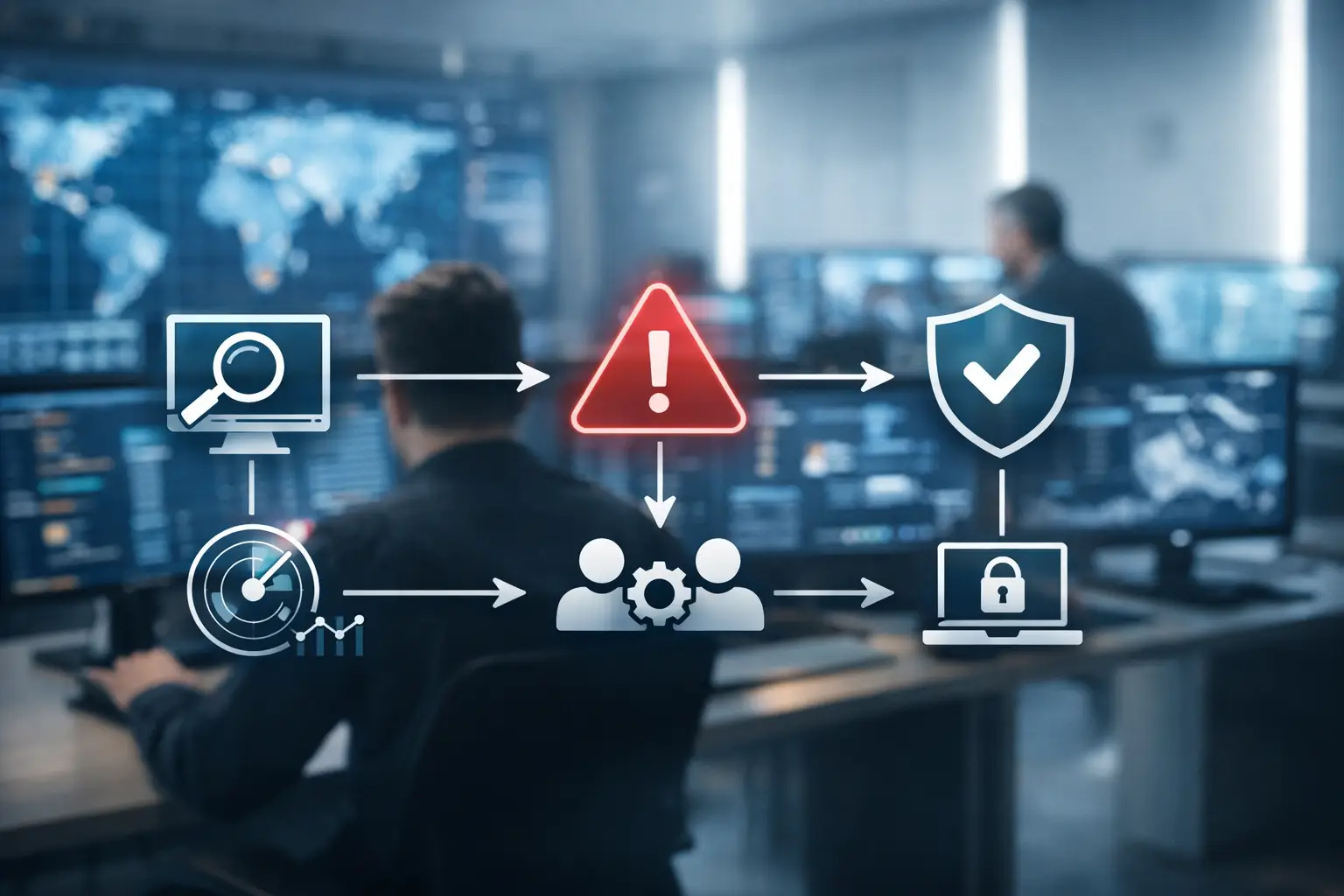
Many platforms perform adequately at discovery and poorly at follow-through. That is a problem, because unresolved findings are where risk accumulates. A security monitoring platform should support the full lifecycle of a finding, from identification to validation after a fix is applied.
This is where consultative security becomes valuable. The best platforms do not stop at saying that something is wrong. They help organizations understand what the issue means, how urgent it is, and what action will close it. In some cases the fix is simple, such as correcting a record, renewing a certificate, or removing an exposed service. In other cases the right response may involve policy changes, application updates, network restrictions, or a phased remediation plan.
There is a trade-off here. Fully automated systems can move quickly, but they often lack business context. Human review adds clarity, but it may take longer. For many organizations, especially those with lean internal teams, the strongest model is a platform backed by structured expert guidance. That gives the business both continuous oversight and a more reliable path to action.
The role of dashboards, administration, and ownership
A platform becomes far more useful when it clarifies ownership. Security issues often remain unresolved because nobody knows who is expected to act. A centralized dashboard should make it easier to assign responsibility, monitor status, and confirm completion.
Administrative controls also matter more than they may appear at first. If you manage multiple domains, locations, departments, or clients, you need a way to organize assets and reports without confusion. A good dashboard should support practical management tasks such as scoping environments, segmenting visibility, reviewing historical findings, and documenting recurring patterns.
This is especially important for compliance-minded organizations. Security oversight is not only about fixing technical weaknesses. It is also about showing that monitoring is taking place, findings are being reviewed, and remediation steps are being tracked. A platform that creates usable records supports both risk reduction and operational accountability.
What to look for when evaluating a security monitoring platform
Start with coverage. Ask whether the platform monitors the assets that actually create risk for your business, including domains, web applications, network exposure, and email-related security settings. If your public footprint is larger than the platform’s visibility, you will still have blind spots.
Next, evaluate signal quality. Does the platform generate actionable findings, or does it flood users with low-value noise? More alerts do not mean better protection. In many environments, too much noise trains teams to ignore issues that deserve immediate attention.
Then consider reporting and usability. Can non-specialists understand what the platform is telling them? Can leadership review trends without needing a technical translator? Can administrators quickly determine what changed and what must happen next? A platform should improve decision-making, not create another layer of interpretation.
You should also look closely at how remediation is handled. Some tools stop at identification. Others support structured workflows, validation, and recurring oversight. That difference has operational consequences. If your team is already stretched, a platform that only points out problems may not move your security posture very far.
Finally, ask whether the platform supports security as an ongoing discipline. Threat exposure changes. Business systems change. Staff changes. Vendors change. If the platform is designed around one-time assessments rather than continuous monitoring, it may help during an audit cycle but fail to support everyday risk management.
Security monitoring platform value comes from consistency
The real value of a security monitoring platform is not that it finds a single critical issue. It is that it creates repeatable oversight. It gives your team a structured way to watch for changes, review exposure, document remediation, and maintain visibility across assets that are easy to overlook when day-to-day operations take priority.
That consistency is where many businesses strengthen their security posture. Not through a one-time project, but through disciplined monitoring paired with clear recommendations and accountable follow-through. For organizations that need both operational visibility and practical guidance, a platform-centered model is often the most sustainable path.
FortifyNET reflects that model well because it pairs monitoring with analysis, reporting, and remediation planning rather than treating alerts as the final output. That approach is especially useful for teams that need security translated into action.
If you are evaluating options, focus less on how many events a platform can display and more on whether it helps your organization identify, understand, and remediate risk on an ongoing basis. The best system is the one your team can actually use to stay ahead of problems before they become incidents.